
Our Journey
From a single question to an ecosystem of space innovation.
Every mission starts with a question.
For Abdullah, it was a simple yet defining one: “What should I do next?”
As a school graduate, he stood at a crossroads, torn between engineering, business, medicine, and more. Like many students, the path wasn’t clear. With guidance from his family, he stepped into engineering, only to realize it wasn’t the right fit. That moment of uncertainty led him to shift into electrical engineering, a decision that would shape everything that followed.
Yet even then, the question remained.
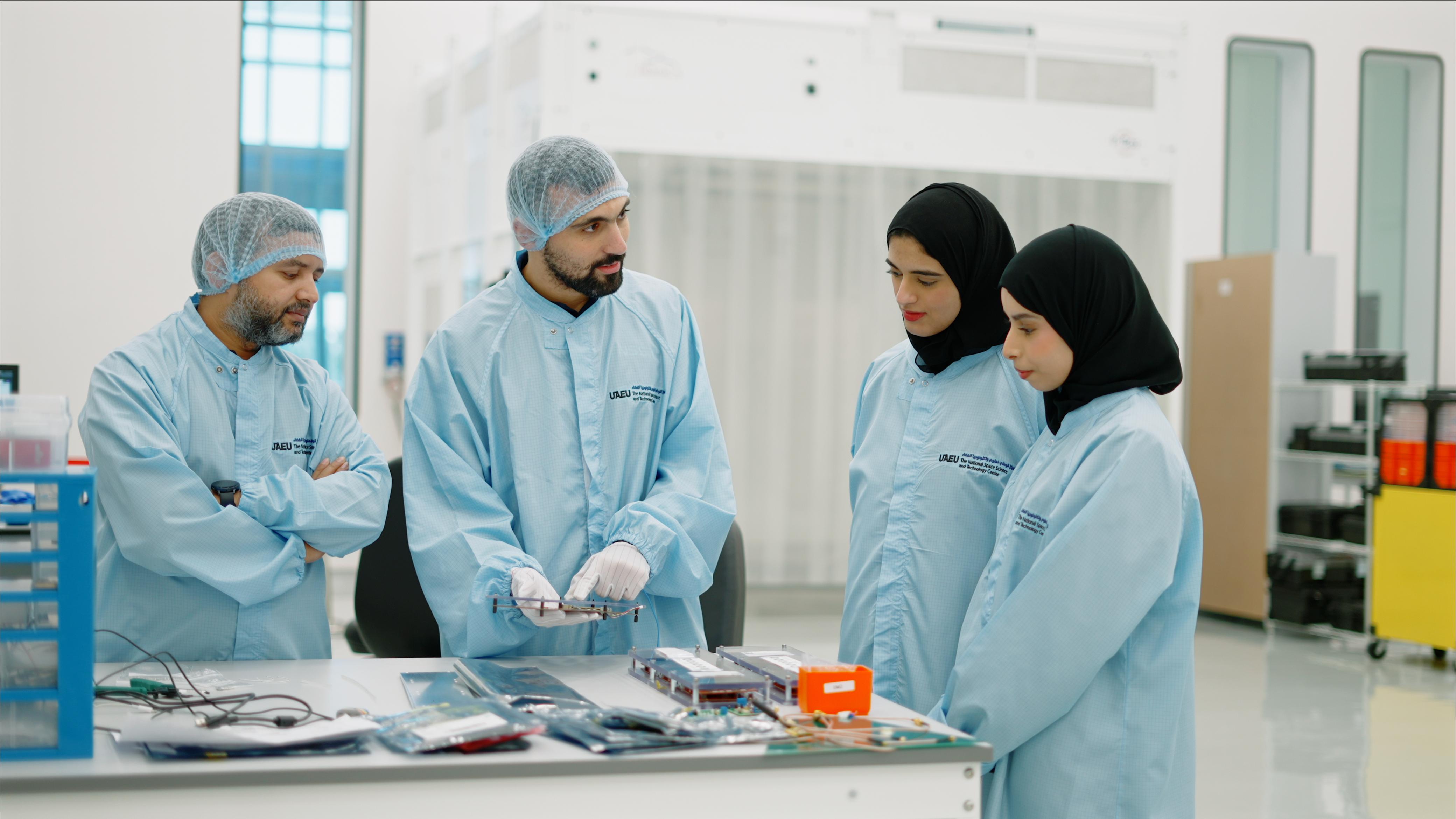
After graduation, Abdullah faced another crossroad: pursue a job, continue studying, or take a completely different path. A recommendation changed everything, he joined a Master’s in Space Science at UAE University. At the same time, he began working at the National Space Science and Technology Center (NSSTC).
"That’s when everything clicked. In the mornings, he was building real satellites, working on systems, integration, and real missions. At night, he was studying the theory behind them."
But something didn’t add up. There was a clear gap between what students learn… and what engineers actually do.
Space technology, one of the most exciting and impactful fields, was simply out of reach for most students. Not because of lack of interest, but because of lack of access. The tools were expensive. The experience was limited. The learning was disconnected.
That realization became the turning point.
The Birth of SatKit
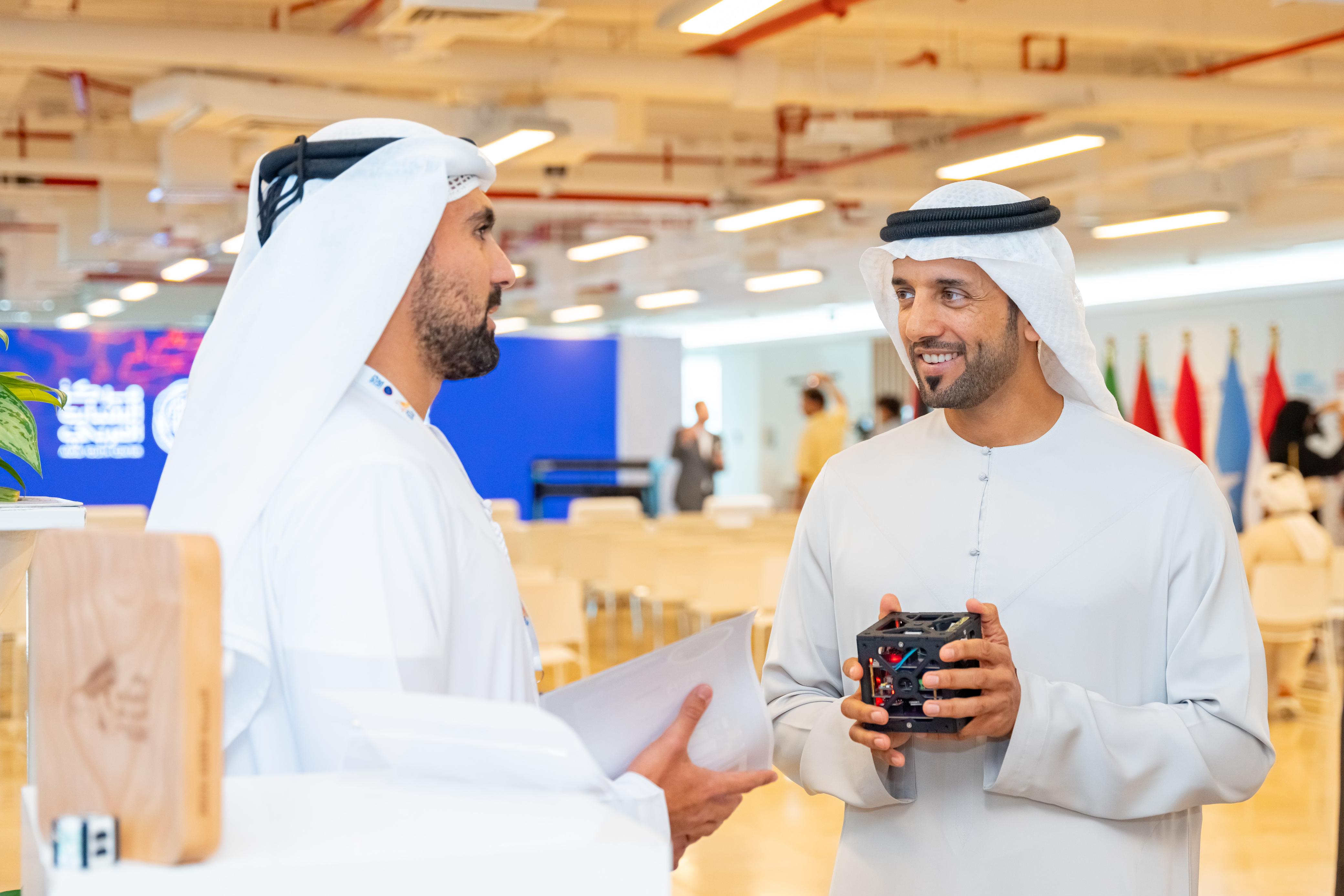
Determined to bridge this gap, Abdullah began working on a concept:
What if students could actually build and understand satellites, hands-on, from day one?
This idea first took shape as a virtual concept, which later gained recognition and awards. But the real breakthrough came when the Abdulla Al Ghurair Foundation saw its potential. Through the support and belief of Nesma Farhat, a simple yet powerful question was asked:
“Can this be adapted for 12-year-old students?”
What seemed ambitious became a challenge worth taking. Within just three months, the first prototype of SatKit was developed, a physical, hands-on educational kit that transforms satellite learning into a real, interactive experience.
But building the kit was only the beginning. It took over a year and a half of development, from March 2023 to June 2024, to fully design the program, curriculum, and experience around it. Every detail was refined to ensure students don’t just learn… but truly experience satellite development.
During that time, the journey was far from public. A small, focused effort was quietly taking shape, supported by a few who believed in the vision early on. Alongside Nesma’s early support, Mohammed Almehrzi contributed with his technical perspective, while Shahera Al Ameemi supported from a business development angle. At that stage, almost no one knew about SatKit beyond this small circle.
Even after Abubaker joined, the team remained just four people, working relentlessly behind the scenes to bring the vision to life. That quiet effort soon turned into a defining moment.
🏆 The project went on to win 1st Place in the AI & Advanced Technology Category at the Graduates Fund’s Entrepreneurship Challenge, marking the first major validation of what SpacePoint was building.
From Idea to Launch
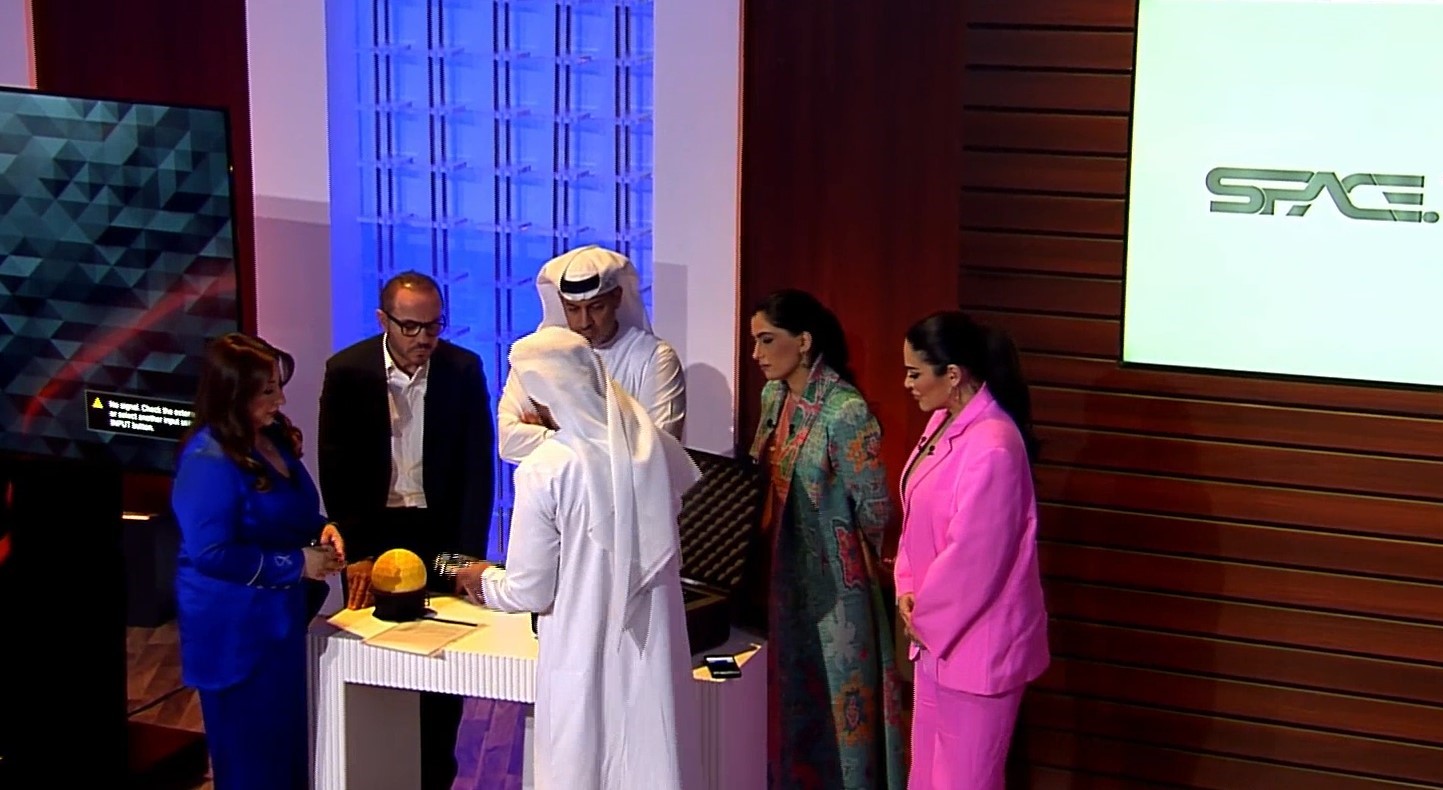
In June 2024, Abdullah stood in front of a panel during a major pitch at Shark Tank Dubai.
He was asked: “When are you launching?”
His answer: “Tomorrow.”
And that’s exactly what happened. The journey officially began.
-
July 2024: First pilot launched at the NASA Space Apps Challenge
-
October 2024: First major contract signed with Space42 (formerly Yahsat/Bayanat)
That moment marked more than just traction, it was validation from the industry itself.
.jpeg)
A Shared Mission
In January 2024, before the official launch, another key piece of the puzzle came together.
Abubaker joined the journey.
Having experienced a similar path of uncertainty in his own academic journey, eventually finding his place in mechanical engineering, he deeply connected with the mission. He didn’t just join a startup. He joined a purpose.
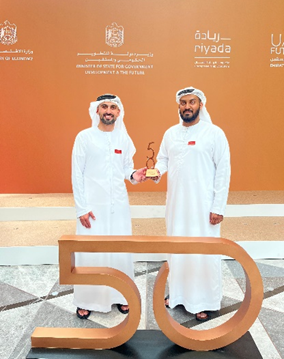
Abdullah
Leads the electrical and systems development vision
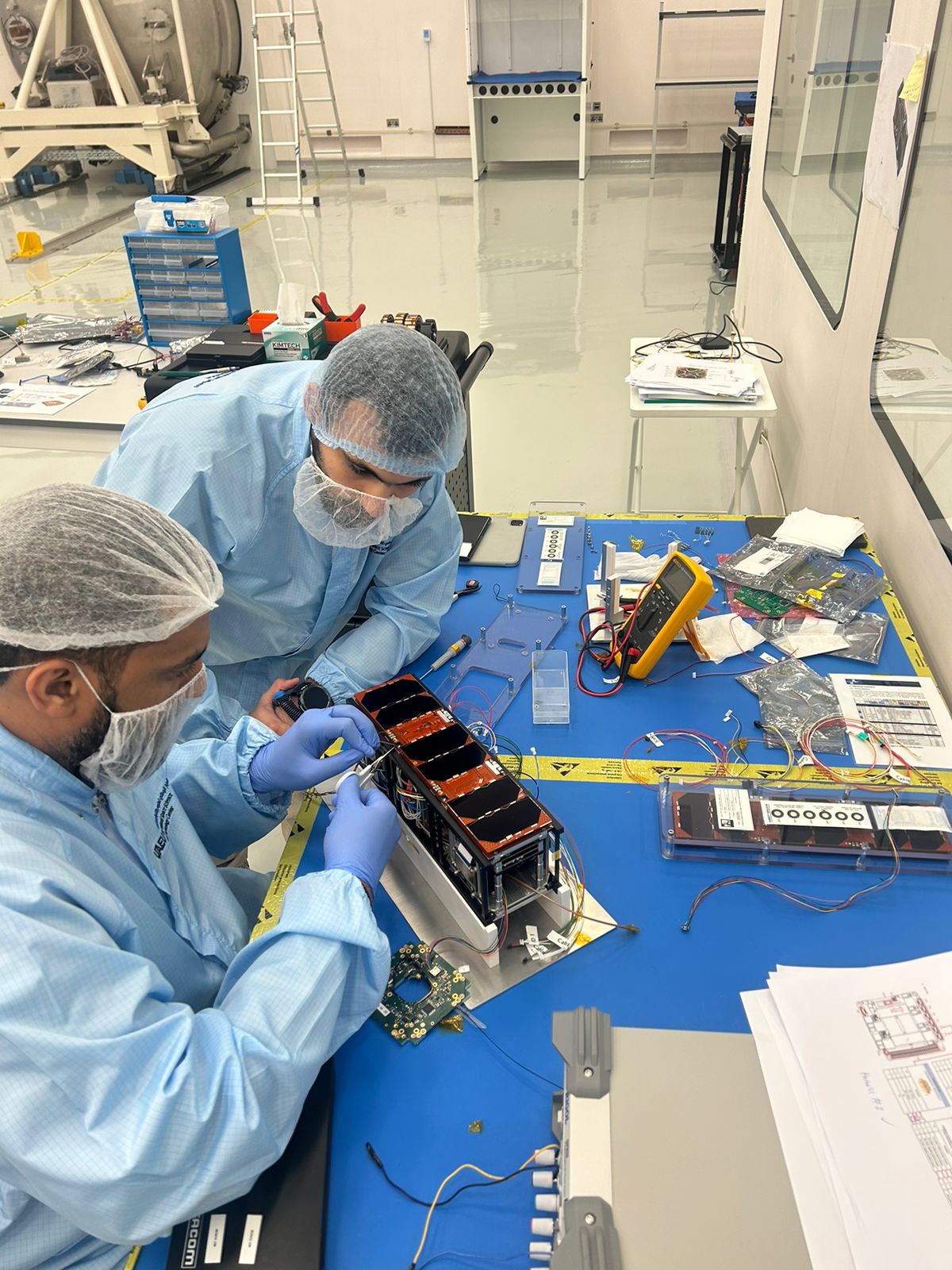
Abubaker
Leads the mechanical and product experience aspects
Together, they built SpacePoint as co-founders, combining complementary expertise with a shared belief: students deserve access to real, hands-on space technology.
Supporting them is a board of advisors, industry experts who believed in the mission early on and contributed their time, knowledge, and trust without expecting anything in return.
Expanding Beyond Borders
What started as a single idea quickly grew into a regional movement.
SpacePoint entered leading incubators and programs, including:
- UAE-based incubators and innovation platforms
- SEA SpaceTech Tech (Saudi Arabia)
Soon after:
- KAUST (Saudi Arabia) became a key partner through their KAUST Enrichment for Youth (KEY) Program
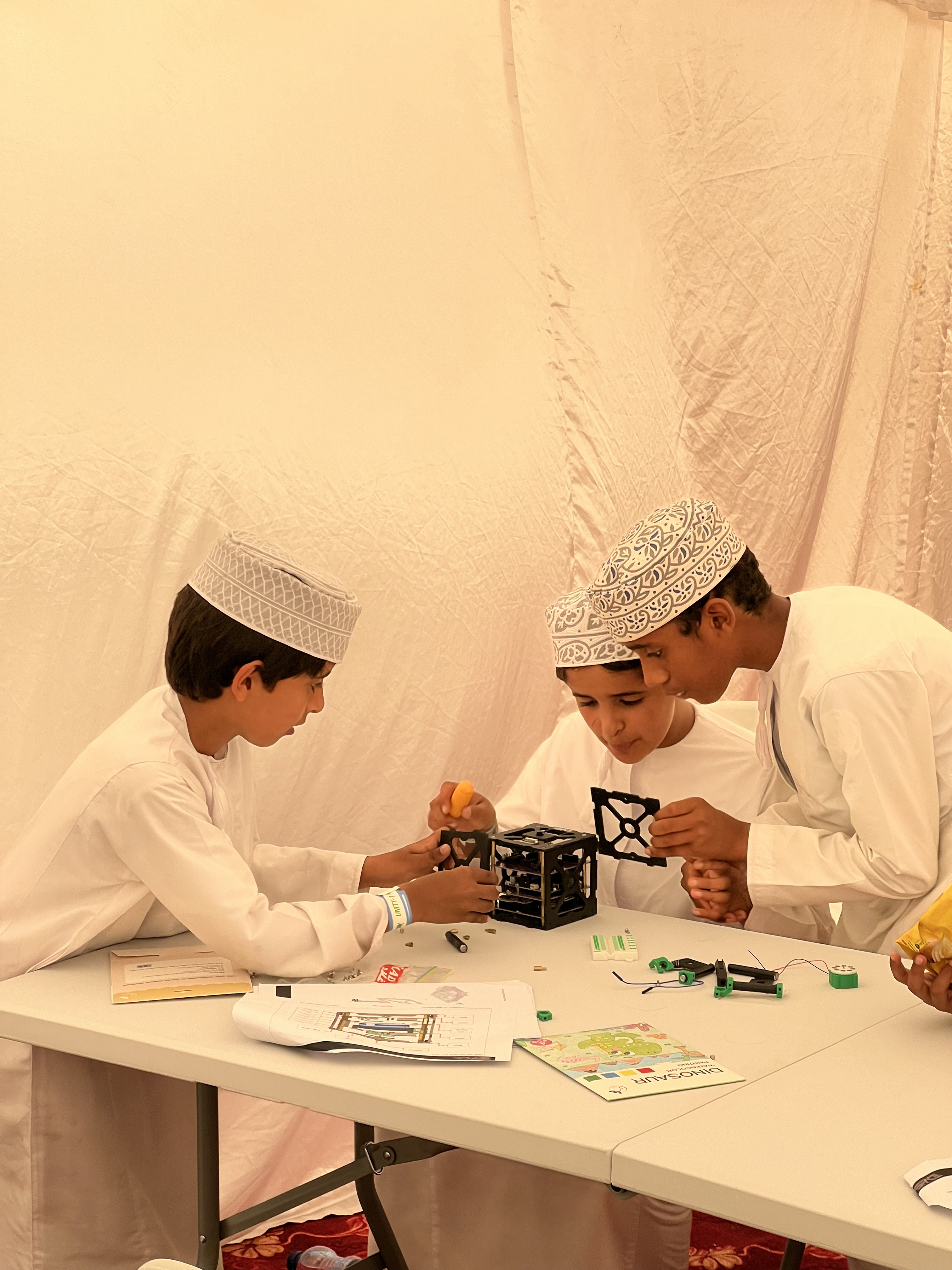
- Expansion began into Oman through collaborations like Etlaq Spaceport
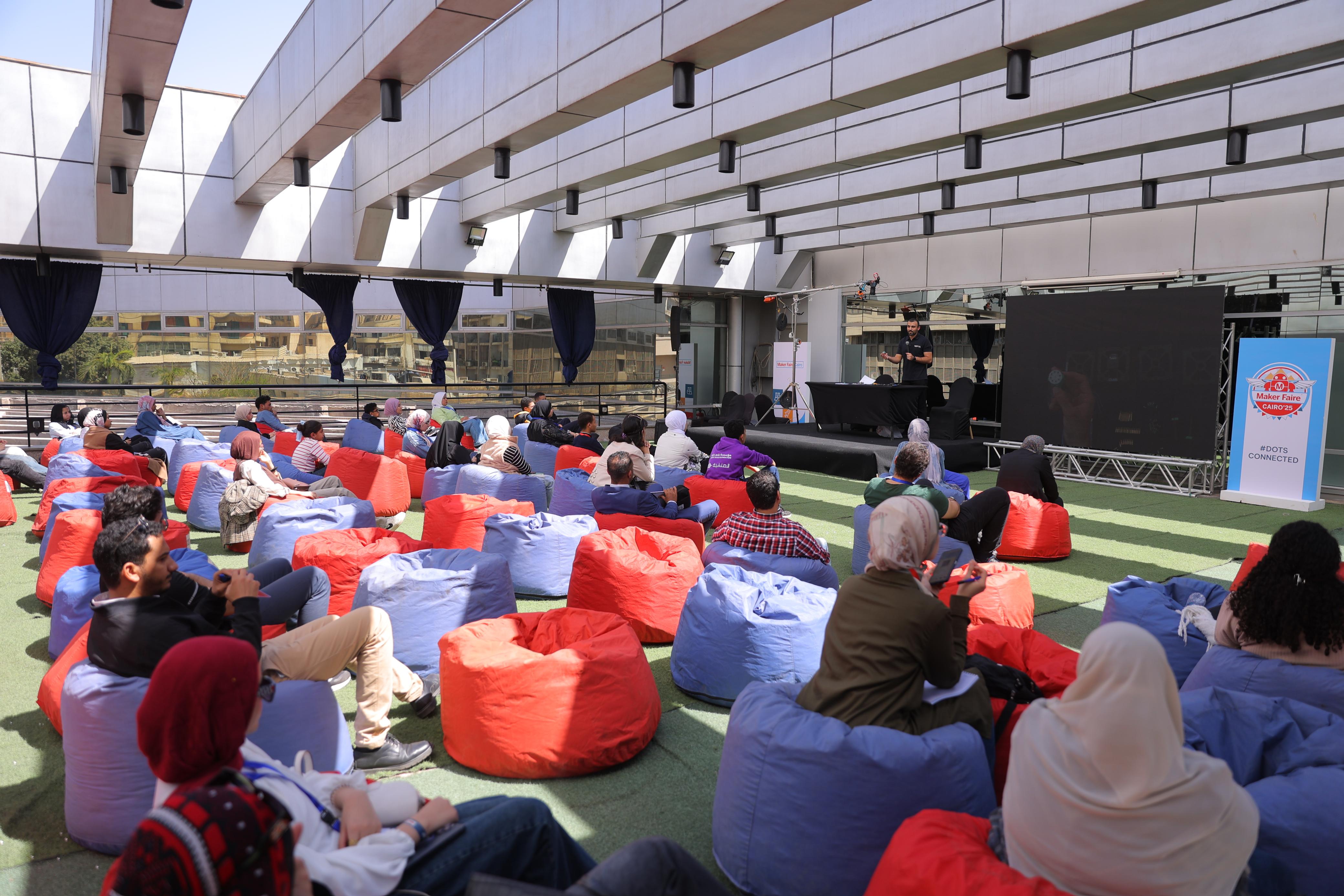
- Entry into Egypt through Maker Faire Cairo as a technical partner
Egypt, in particular, became a major focus, marking a strategic step toward scaling impact across the region.
From One Student to Thousands
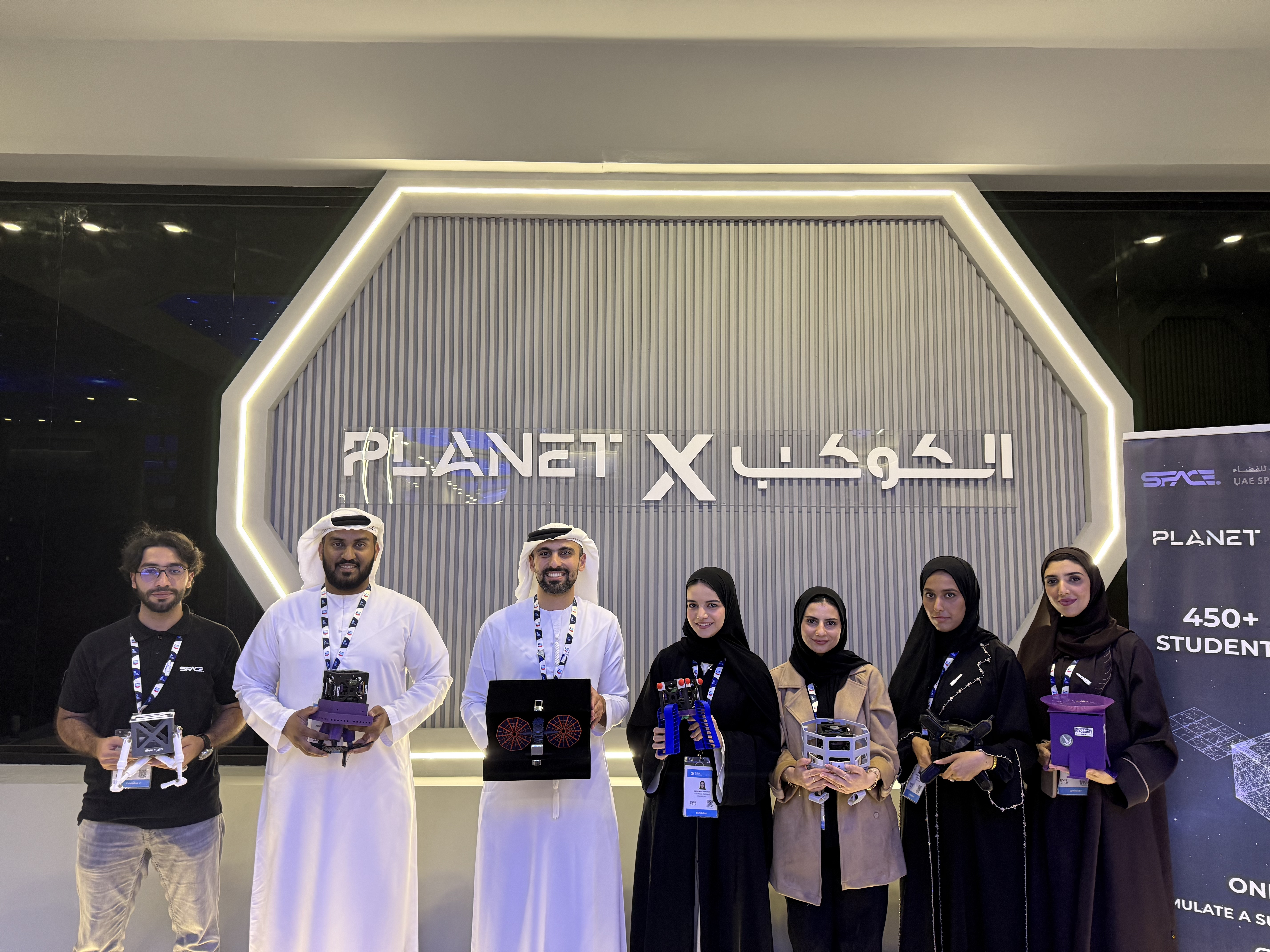
What began as one student’s question has now impacted hundreds, soon thousands, of students across the region.
SpacePoint continues to grow rapidly:
-
🚀Expanding programs across multiple countries
-
🤝Building partnerships with leading institutions
-
🛰️Empowering students with real satellite development experiences
This Is Just the Beginning
Our journey is not just about building satellites. It’s about building confidence, curiosity, and capability in the next generation.
And we’re just getting started.